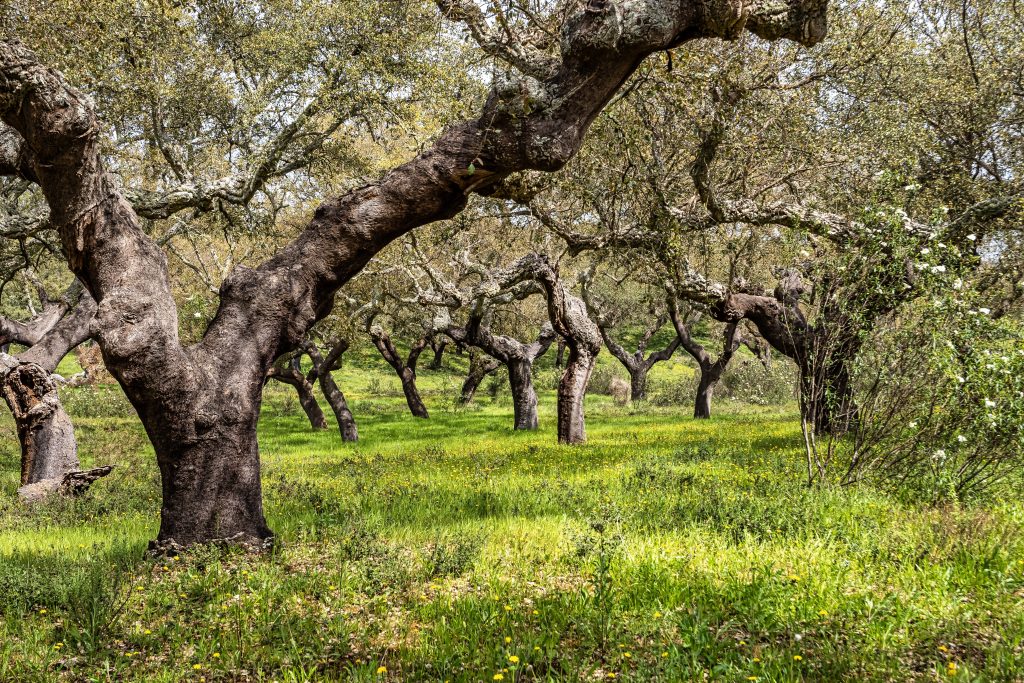
The history of cork: The 17th-century English physicist Robert Hooke was curious about cork & its ability to float, its springy quality & its usefulness in sealing bottles so he investigated the structure of cork under his microscope.
What he saw looked like a piece of honeycomb. The cork was full of small empty compartments separated by thin walls. He called the compartments “pores, or cells.”
Cork floats, Hooke reasoned, because air is sealed in the cells. That air springs back after being compressed, and that’s why cork is springy.
Hooke’s observation not only explained the properties of cork, but gave a hint that all living tissue might be made of small building blocks.
Our understanding of what those building blocks are has changed since Hooke’s time. Today we’d say that what Hooke observed were dead walls that had been created by living cells when the cork was still part of the tree.
But we still use the word cell, and our usage can be traced back to the microscopic observations of cork made over 300 years ago by Robert Hooke.